(Information is that the front suspension isn't that good, and eats the matalastic bushes. Narrow cockpit so aftermarket seats are hard to get and are expensive)
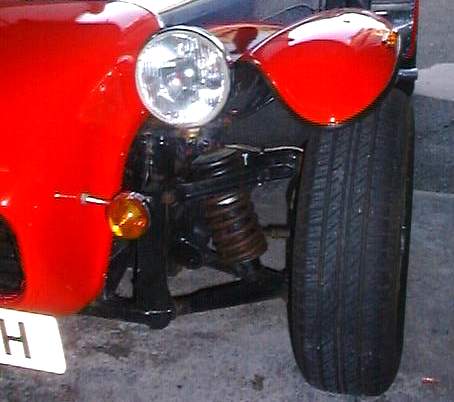
Monocoque tub with ugly Cortina front suspension actually works quite well. The rear suspension can "knock" with the diff rotating slightly under load, and requires a torsion bar fitting to stop this. Again the cockpit is narrow with the usual seat problems.
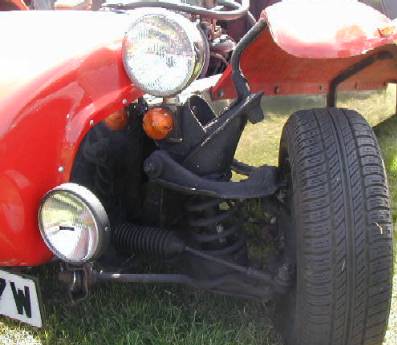
Very similar to the previous Cortina model, except that we have now gone to Sierra components. With a large portion of the sierra front suspension used, complete with the sierra rear axle etc. Also using the sierra springs onto the rear wishbones, which can be seen to have a piece of rope through each spring to stop it coming off it's seating on full rebound
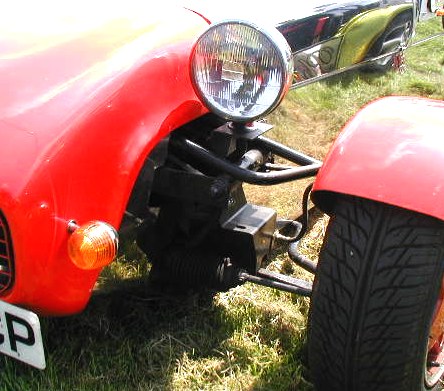
The mk2 is very similar to the mk1 but if you look where the bottom radius arm attaches, on the mk2 it attaches to the RHSC frame, whereas in the mk1 it's still in the Sierra framework.
The top wishbone on these are RH design, and need modifying by fitting a grease nipple into the pivot to regularly grease this. Further inprovements can be made by changing the sierra anti-roll bar for tie bars, and reducing the front spring strength.
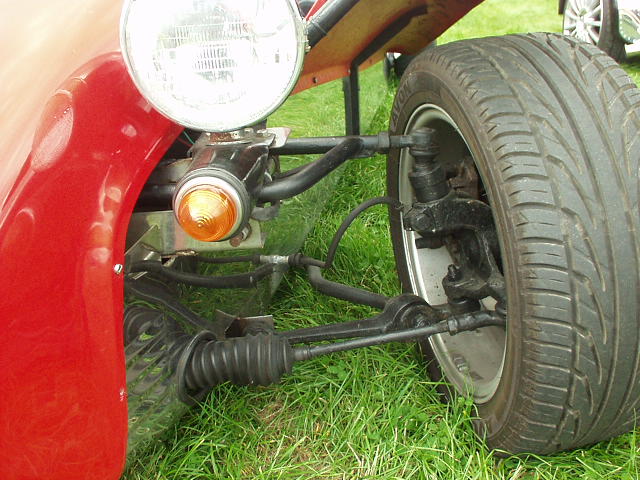
Similar bottom radius arm connections, but with the McPhersons type front suspension, mounted onto buttresses, this mounting is prone to cracking up where the strut connects. The other drawback with this type of suspension is that it is nearly impossible to fit cycle wings, due to the buttresses. A plus on the cockpit on these is that it's considerably wider than the previous models, so the narrower "Clubman" type aftermarket seats can be forced to fit.
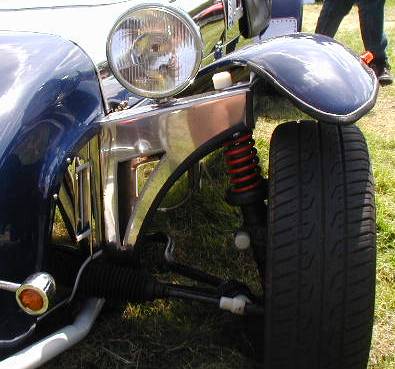
Front suspension is similar to the mark 2, except that the top wishbone now mounts into a formed channel part of the monocoque chassis, the grease nipple mod still applies, but the channel where the pivot bar mounts, is a weak spot, and after a while the holes will wear or even cracks can appear, suitable strengthening is required. The cockpit on the Mk3 has gone slightly narrower than the Exmo, but not as narrow as the earlier cars. The rear suspension is the sierra components, now hung onto RH coil-over shocks.
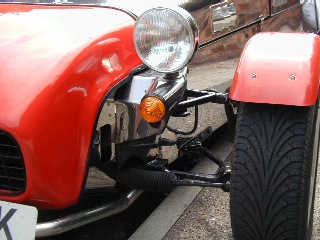
(Comments as mark 3)
It is worth noting that all the stainless monocoque models suffer to some extent or other with the tub cracking at stressed area's, especially at the corners of the engine bay where the vertical welds are. At suspension mounting area's, both front & rear.
.jpg)
.jpg)
2B sliding pillar.
Both top & bottom anchorages are fixed, and the hub slides up & down a shaft.
RH's first round tubular chassis 2B. There were numerous problems with the sliding pillar system, some because aftermarket components had been used on the donor car, and the pieces required weren't up to strength. Basically it wasn't the success that RH thought it would be, but saying that, there are some good ones out there that have covered some good distances without trouble. The cockpit on the 2B is the largest 7ish available, and can take the standard sierra seats [with the plastic trim removed] so most aftermarket seats can fit.
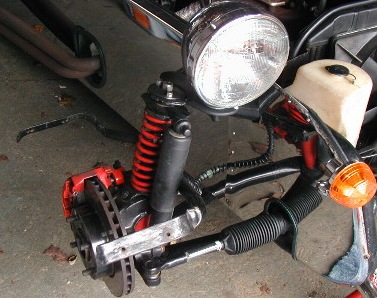
(this car was modded, and the new suspension transformed the car)
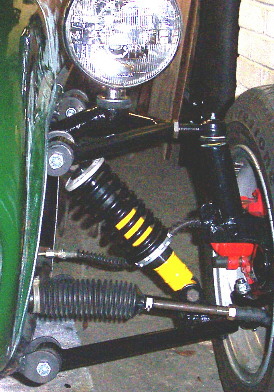
2B wishbone Chassis.
The wishbones pivot in the ends of box channel sections.
Accepted as the best 2B kit produced so far, with the suspension working fine. Although like all the cheap suspension units {Zemmeride, or some like that!} issued by RHSC for previous models, they will literally fall apart after a few thousand miles, an upgrade to a good well respected make is a must.
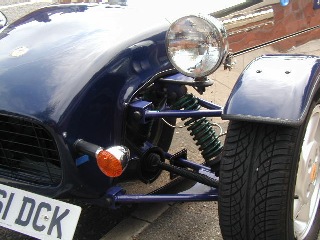
Superspec
The final Robin Hood model was the Superspec, which came as a rolling chassis and with a complete set of new parts, thereby not requiring a donor car.
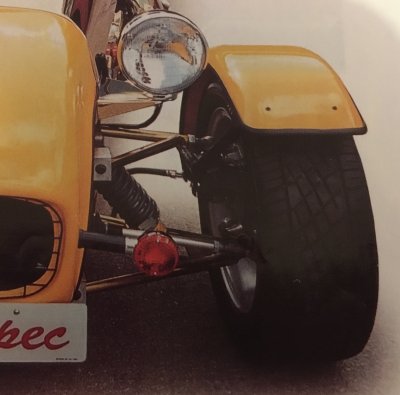
The Sub K, was available with mild steel panels or s/s panel option.
Became the 2B/04 in 2004, when only available with S/Steel panels.
Note that the top anchorage of the spring is fixed, and a McPherson strut type of unit, similar to the Exmo, provides the suspension, and we're back to the sierra anti-roll bar stiffness problems. The headlights are somewhat higher than on the wishbone 2B. I also believe that there is some difference in the size/strength of the tubing around the rear boot area.
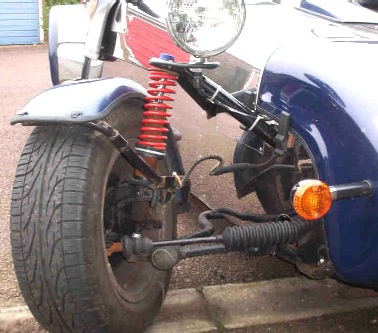
The Lightweight
This model was first shown in 2003, but it was only in 2005 that it actually went on sale, due no doubt to the modifications needed, as it was panned as being flimsy to say the least. Since that, it has been strengthened around the main suspension components, and RHSC were supposedly running one in club races.
The lightweight hit a serious snag with the SVA, when a poorly built one was submitted for inspection, this put the model under the spotlight for all the wrong reasons, and lightweights in the original design will now fail the SVA on major issues. Anyone thinking of buying a none-SVA'd Lightweight kit secondhand needs to know the problems beforehand.
PLEASE NOTE, this Lightweight has been through the SVA and is in good order.
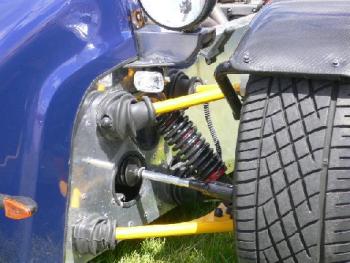
|
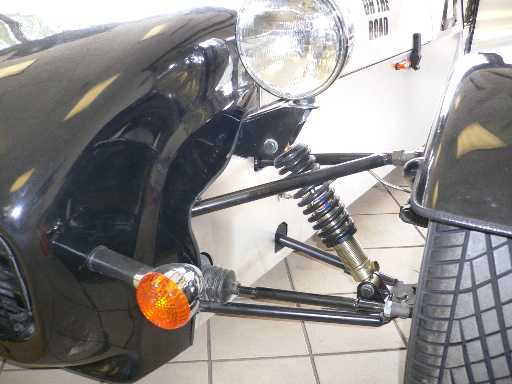
Modified Lightweight This was what was the lightweight, now with a chassis inside it to give it the strength it lacked. as you can see the front suspension is very similar to the Zero, above. you will also note that we now have properly designed suspension mountings, with Gaz shockers instead of the Zimmerides |
|
|
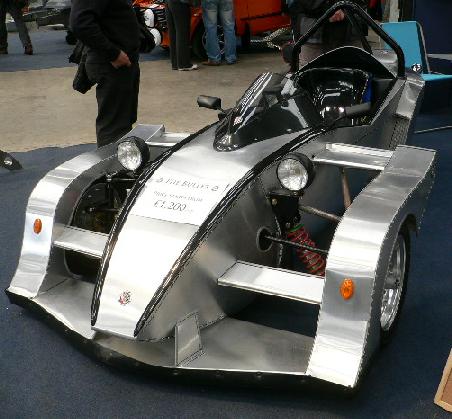
The Bullet. A 3 wheel machine built to use scooter engines as the powerpack. Initially with up to 125cc engines, but there's talk of it being strengthened etc so that up to 1000cc m/cycle engines can be used/ |
 |
However, I would advice anyone thinking of building or buying a Robin Hood to first of all visit one or two of the usual kitcar shows, and talk to the Owners Club members. also it's an advantage to join the Owners Club, then you would have access to the local Area Sec. who can put you in touch with members close to you. A link to the Owners club is on the front page of this website.
A list of models produced by Robin Hood Engineering is as follows. Some of them were one-off's and are unheard of out of the factory itself